
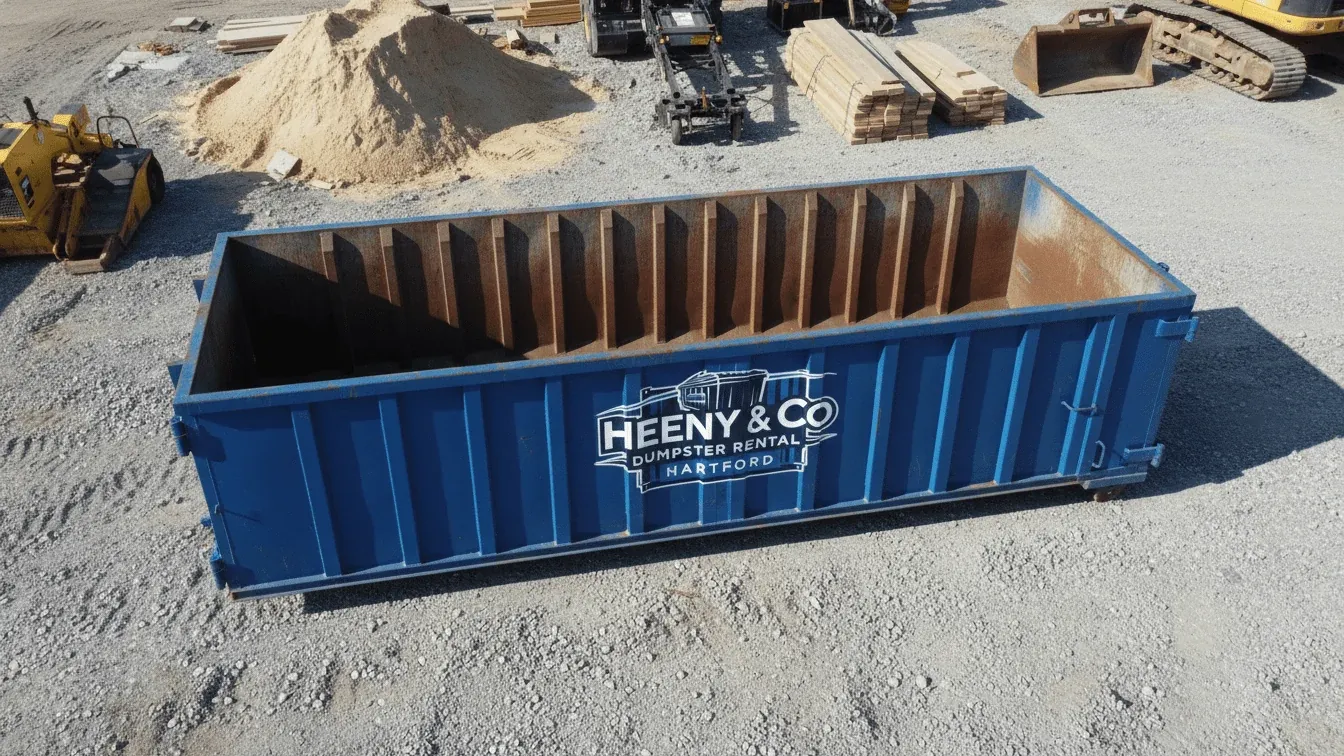
Estate cleanout
Estate Cleanouts in Hartford
Patient, discreet work in a city where about half the housing predates 1950. Nothing is moved before the family has looked at it, and the things that cannot go in a container are handled properly rather than quietly.
An estate cleanout is not a junk job with a sadder name. The house usually belonged to someone who lived in it for forty or fifty years, the family are often working to a probate date or a closing they did not choose, and half of the contents have to be looked at by a person before anything is decided. We work at the pace the family sets. That means a container that sits on the drive for as long as it takes, collections arranged when you ring rather than on a day we picked, and drivers who set the box where it is least conspicuous from the street if that matters to you. It usually does.
Hartford makes this particular work distinctive. About half of the city's housing units were built before 1950, so the houses in question are old, deep and full. A full cellar under a 42 inch frost line, a cold attic that preserved everything put in it, storm windows stacked behind a partition, a workshop bench that has not moved since it was built in place. Add to that Hartford's building type: many estates are one flat in a three-family or a Perfect Six, which means a third-floor walk-up, a shared drive, and neighbours on the other side of a wall who deserve to be told what is happening before a truck arrives.
The material in a house of that age needs a little more care than a modern one. Paint, solvents, pesticides and pool chemicals from decades of ordinary household life go to the Metropolitan District Commission facility at 125 Maxim Road, and paint specifically has a PaintCare drop-off network across Connecticut funded by a fee of up to $2.25 paid at purchase. Mattresses go to the Bye Bye Mattress programme rather than the box. Electronics have been banned from disposal here since 1 January 2011. And if there is a heating oil tank in the cellar, which there frequently is in a house of that vintage, that is a licensed job with its own rules and it never goes in a container.
What An Estate Cleanout Involves Here
Whole-House Clearance
Room by room, cellar to attic, at the family's pace. A house lived in for half a century holds more than any walk-through suggests, and the attic is usually the surprise rather than the cellar.
Probate And Closing Deadlines
A date set by a court, an executor or a buyer rather than by the family. We can put a box on the drive today and take the pressure off the calendar even if the sorting takes weeks.
One Flat In A Multifamily
The estate is a single unit in a three-family or a Perfect Six. A third-floor walk-up, a shared drive, and neighbours to be told before the truck arrives rather than after.
Sorting Before Disposal
Papers, photographs, jewellery and documents turn up inside furniture and boxed in the cellar. Nothing is tipped without a look, and anything that might matter is set aside for the family.
Furniture From A Pre-War House
Solid, heavy and often worth more to a reuse outlet than to a container. Worth a call to a charity or a dealer before the box is ordered rather than after it is full.
Cellar Workshops And Storage
Benches, tools, hardware, tins and jars, and shelving built in place. The metal comes out for scrap and the liquids come out for the MDC facility before anything else moves.
Household Chemicals And Paint
Decades of accumulated tins under the stairs. Paint goes to a PaintCare drop-off, the rest to the MDC facility at 125 Maxim Road in the South Meadows, and none of it goes in the box.
The Oil Tank In The Cellar
Common in Hartford houses of this age and not a container job under any circumstances. Removal is licensed work with reporting obligations, and it is arranged separately before the clearance finishes.
Sizing An Estate Cleanout Container
Estate work almost always needs more container than the family expects, and less than a contractor would order. A 15 yard suits one flat in a multifamily, or a single-storey house where the contents have already been sorted. A 20 yard is the common answer for a whole house done gradually, because it takes furniture, carpet, bedding and boxed material without needing a swap halfway through. A 30 yard is right where a whole Perfect Six unit or a large single-family house is going out front to back, including the cellar and the attic in the same programme. What we steer people away from is the 40, unless the load is genuinely all furniture and cabinetry: the moment plaster, tile or a wet cellar's contents go in, a 40 is past payload while it still looks half empty. Where a house has both light bulk and heavy material, two boxes loaded by weight beat one box loaded by room.
15 Yard Dumpster
A single room, a small tear-off, or one unit of a multifamily turnover.
View this size →20yd³20 Yard Dumpster
A full basement and attic clear-out — the New England default — or a multi-room remodel.
View this size →30yd³30 Yard Dumpster
A whole Perfect Six or three-decker with basement and attic, or a large remodel.
View this size →Working Discreetly And Handling What Cannot Go In
Discretion is a practical thing rather than a promise. We set the box where it is least visible from the street when that is possible, we tarp overnight, and on a shared drive we ask which side the neighbour parks on before the truck arrives. Placement is still governed by the fire code: under IFC 2021 section 304.3.3 as adopted in Connecticut, a container of 1.5 cubic yards or more cannot sit inside a building or within five feet of a combustible wall, opening or roof eave line, so the tucked-away spot beside the porch is often not available. In the street, the Obstruction Permit runs $50 plus three cents per square foot per day through the Public Works Permit Division on 860-757-9970. On the material itself: paint to PaintCare, mattresses to Bye Bye Mattress, electronics to the drop-off centre because they are banned from disposal, scrap metal and cardboard separated as mandatory recyclables, and household chemicals to the MDC at 125 Maxim Road. Asbestos never goes in a container, and a heating oil tank in the cellar is licensed work handled separately.
Not sure this is the right service? Describe the job on the phone and we will point you at the right container even if it is a different service page. Call (959) 666-6427.
Get a flat quote
Two minutes on the phone gets you a size, a price and a delivery slot. No forms.
(959) 666-6427Recommended sizes
How it works
Estate Cleanout Dumpsters in four steps
- 1
Call us
Tell us the project, your address and when you want it. Two minutes on the phone and you have a flat price.
- 2
We deliver
Our driver walks the drop, lays protection boards and sets the container exactly where you want it.
- 3
You load it
Take your time within your rental window. Keep it level with the top rail and we handle the rest.
- 4
We haul it
Call or text when you are done. We pull it, sort what can be recovered and dispose of the rest properly.
Estate Cleanout Dumpsters FAQs
How quickly do these jobs usually run?
Slower than a rental turnover and faster than families fear. A whole house in Hartford, cellar and attic included, is realistically two to four weekends if the family is doing the sorting, and less if we are doing the carrying. What sets the pace is the sorting rather than the volume, because in a house lived in for fifty years documents and photographs turn up inside furniture and at the bottom of boxes. Leave the container on the drive between sessions; that is what it is for. If there is a probate or closing date driving things, tell us at the start and we will plan the swaps around it rather than around our route.
What if we find things we did not expect?
That is normal and it is why we work slowly. Papers, jewellery, cash, service records, photographs and deeds turn up regularly in cellars and attics. Nothing is tipped without being looked at, and anything that appears to matter goes to one side for the family. The other kind of surprise is material: a bag of old pipe insulation, a stack of asbestos-cement siding shingles behind the garage, a drum of something unlabelled. Those stop the job rather than joining the load. Connecticut's asbestos rules expressly include single family homes under RCSA section 19a-332a-1, so there is no owner-occupied exemption to fall back on.
There is an oil tank in the cellar. Can you take it?
No, and nobody with a roll-off should say otherwise. A heating oil tank is licensed removal work with its own handling and reporting obligations, and CT DEEP has rules on releases that apply the moment a tank turns out to have leaked. Old cellars in Hartford frequently have one, sometimes disused for decades, and it needs to be dealt with before the house changes hands anyway. Arrange it separately and early, because a tank discovered in the last week of a clearance is what delays a closing. Once it is out, the rest of the cellar is ordinary work and the container handles it.
Can you keep the work discreet?
Yes, and on a Hartford street it takes a bit of planning rather than good intentions. We set the box on the least visible line of the drive where the geometry allows, keep it tarped between sessions, and try to schedule delivery and collection outside the hours the street is busiest. On a shared drive between two multifamily houses we would rather know in advance where the neighbour parks. What we cannot do is put the container tight against the house to hide it, because IFC section 304.3.3 as adopted in Connecticut keeps any container of 1.5 cubic yards or more at least five feet from combustible walls, openings and roof eave lines.
Is any of it worth selling or donating first?
Frequently. A pre-war Hartford house often holds solid furniture, tools, books and household goods that a reuse outlet or a dealer will take, and doing that before the container arrives is easier than digging things back out of it. Scrap metal has to be separated anyway as a mandatory recyclable, and in a cellar of this age that can mean cast-iron radiators, copper pipe and a boiler frame. Mattresses go free through the state stewardship programme rather than into the box. Our advice is simple: sort for people first, scrap second, container last. That order usually reduces the size of box you need by one step.
More services
Other things we haul
Residential Dumpster Rental
Driveway placement for full-basement, attic, porch and shed cleanouts and remodels.
Learn more →Commercial Dumpster Rental
Containers for businesses and buildings over six units, which the City does not collect from.
Learn more →Construction Dumpster Rental
Mixed C&D in one roll-off, the way CT DEEP recommends, with next-day swap-outs.
Learn more →Roofing Dumpster Rental
Weight-rated cans sized by squares and layers for asphalt shingle tear-offs.
Learn more →Roll-Off Dumpster Rental
10, 15, 20, 30 and 40 yard roll-offs across Hartford and the Capitol Region.
Learn more →Same-Day Dumpster Rental
Call before the cut-off and we can usually get a container to you this afternoon.
Learn more →Junk Removal Dumpsters
Clear a full basement, attic, porch or shed on your own schedule.
Learn more →Demolition Debris Removal
Containers and fast swaps for porches, decks, sheds, garages and interior gut-outs.
Learn more →Concrete & Heavy Debris
Dedicated heavy cans for concrete, brick, plaster and foundation spoil.
Learn more →Yard Waste & Brush Removal
Separate clean loads — Connecticut bans grass clippings from solid waste facilities.
Learn more →Where we deliver
Estate Cleanout Dumpsters across the Capitol Region and Greater Hartford
Same service, same flat rates, every town below. Pick yours for local placement and permit notes.
Talk to a real person
Need estate cleanout dumpsters in Hartford?
Tell us what you are clearing out and we will tell you the right size and the flat price to put it in your driveway. No forms, no waiting on an email — just call and we will sort it out in a couple of minutes.
Serving Hartford, the Capitol Region and Greater Hartford · Mon–Fri 6:30am–5pm, Sat 7am–1pm